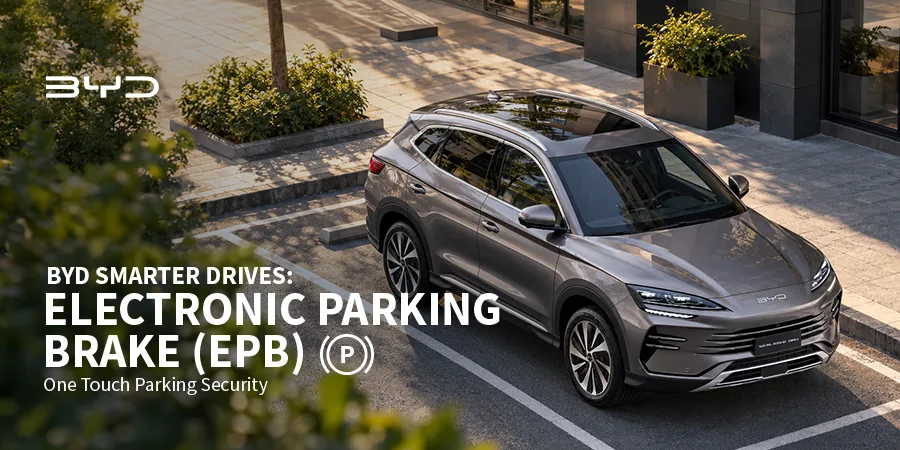
Knowing how your vehicle’s parking brake works ensures every drive ends safely and smoothly. The BYD Electronic Parking Brake (EPB) uses an electric motor to firmly hold your vehicle in place when parked. Beyond holding the car, it adds effortless convenience to daily driving through automated engagement and release features.
Because EPB controls and automated settings vary slightly across BYD models, it’s always good practice to familiarize yourself with your specific display icons and controls.
Reminder: Before stepping out of your BYD, always confirm two things on your instrument cluster: the transmission is in Park (P) and the EPB is fully engaged.
How Does the EPB Work?
When you activate the EPB, an electric motor presses the brake pads against the brake discs to keep the vehicle completely stationary—even on steep inclines.
- Normal Whirring Sound: You may hear a quick motor whirring sound as the EPB engages or releases. This is completely normal operating noise.
- Dashboard Indicator: When you engage the system, the parking brake light ((P) or BRAKE) on your digital cluster may flash briefly before staying solid red, confirming the brake is set. Always keep your foot on the foot brake until the light stays solid.
How to Engage the EPB When Parking
- Come to a Complete Stop: Press the brake pedal firmly and bring the vehicle to a full stop. Keep your foot on the brake.
- Select Park (P): Shift into P using your gear selector or button.
Note: Many BYD models automatically engage the EPB as soon as you select Park. Check your instrument cluster to verify.
- Manually Apply EPB (If Needed): If your model does not auto-engage EPB, pull up on the physical EPB switch (or tap the EPB control on your infotainment screen).
- Confirm Engagement: Hold the foot brake until the red EPB icon lights up solid on your instrument cluster. Once confirmed, you can safely release the foot brake and exit the car.
Automatic EPB Engagement
Depending on the model and operating conditions, the EPB may engage automatically when Park is selected or when the vehicle is powered off.
These functions make parking more convenient, but checking the system’s status should be part of your routine. Do not assume that switching off the vehicle has secured it.
Special towing or service modes can also change automatic parking-brake behavior. Pay attention to any related messages or settings before leaving the vehicle.
How to Release the EPB and Drive Away
1. Start the vehicle and press the brake pedal
Keep the vehicle stationary with the brake pedal while preparing to drive. Allow any startup system checks to finish.
2. Select the intended gear
With the brake pedal pressed, select Drive (D) or Reverse (R) as needed.
Confirm that the intended gear appears on the instrument cluster before releasing the brake pedal.
3. Release the EPB
Use the EPB release control or the automatic release function provided in your vehicle.
Automatic release conditions vary by model. Some systems release the parking brake when a driving gear is selected under the required conditions; others can release it when the accelerator is pressed gently as you prepare to move.
Check that the parking-brake indicator confirms release. If the EPB remains engaged or a warning appears, keep the vehicle stationary and check the displayed instructions.
4. Check your surroundings and move smoothly
Once the intended gear is selected and the EPB is released, check that the path is clear and move off carefully.
Be ready for the vehicle to move as the parking brake releases.
Key Safety Reminders for Everyday Use
- Keep the brake pedal pressed during parking-brake transitions. This helps control the vehicle while the EPB engages or releases, particularly on an incline.
- Confirm engagement before leaving. Selecting Park and checking the EPB should be part of every parking routine.
- Pay attention to indicators and messages. An illuminated parking-brake indicator can show that the brake is applied. If you see an EPB fault warning or malfunction message, this would require attention from a BYD authorized dealer or service provider.
- Keep passengers from operating parking controls. Unexpected operation while the vehicle is moving can create a serious hazard.
- Know which sounds need attention. A brief motor sound can accompany normal EPB operation. Unusual noises, a burning smell, or a failure to engage or release should be checked promptly.
What If the EPB Won’t Release?
Keep the vehicle secured with the brake pedal and check the instrument cluster for instructions or warning messages.
Release and recovery procedures differ between models. Avoid experimenting with towing or service settings, as these can affect how the parking brake operates.
If the EPB will not release, contact a BYD authorized dealer or service provider for assistance. If a malfunction occurs and the brake subsequently releases, arrange an inspection right away.
Emergency Braking Requires Particular Care
Use the brake pedal for everyday stopping. Where an EPB emergency braking function is provided, it is intended for exceptional situations such as failure of the normal brakes or a blocked brake pedal.
The activation procedure depends on the vehicle. Familiarize yourself with your BYD’s emergency controls before a problem occurs.
Emergency braking can cause the vehicle to slide or lose stability, particularly on curves, slippery surfaces, or in severe weather. Electronic braking functions cannot overcome the limits of tire grip.
Simple Checks for Peace of Mind
The BYD Electronic Parking Brake helps simplify parking and moving off while supporting secure parking when used correctly.
Understanding your vehicle’s controls and checking the instrument cluster can help you use the feature with confidence. At the end of every drive, make it a habit to stop completely, select Park, and confirm that the EPB is engaged before leaving your BYD.